
Overview
The Intel® Health and Life Sciences (HLS) AI Suite is an edge-native benchmarking framework designed to demonstrate and evaluate what is possible when building multimodal, AI-enabled clinical applications. Featuring modular, open-source reference stacks optimized for Intel® Core™ Ultra processors, the suite allows developers to analyze deterministic execution, platform headroom, and CPU/GPU/NPU workload placement using representative medical pipelines rather than synthetic benchmarks—de-risking critical hardware decisions before design commit.
 View on Github
What's New
Health and Life Science 2026.2
Intel® HLS AI Suite 2026.2 expands beyond patient monitoring into surgical imaging with our new Real-Time Endoscopy AI Sample Application. Prototype and profile low-latency, high-throughput surgical workloads across Intel CPU, GPU, and NPU architectures. Consolidate complex pipelines, measure glass-to-glass latency, and de-risk your next medical device design today.
Learn MoreIntel® Core™ Series 3 Processors for Health and Life Science AI Suite
Consolidate clinical workloads without compromise. Intel® Core™ Series 3 processors provide deterministic, low-latency compute for both multimodal patient monitoring and real-time surgical imaging. Power the new HLS AI Suite 2026.2 Endoscopy application on unified silicon, eliminating discrete GPUs to reduce medical device BOM, power, and sterile-zone thermal complexity.
Learn MoreBenefits
Accelerate development and validation of multimodal AI patient monitoring at the edge.

Evaluate Realistic, Device-Specific Clinical AI Workloads
Stop relying on generic software benchmarks. The expanded HLS AI Suite delivers multiple healthcare-specific reference applications spanning bedside patient monitoring to low-latency endoscopy workflows allowing you to evaluate representative, edge-native clinical pipelines directly on your target hardware.

Accelerate Proof-of-Concepts with Deep Platform Visibility
Rapidly prototype and validate edge-native systems with absolute clarity. Gain deep, real-time visibility into CPU, GPU, and NPU utilization, measure precise glass-to-glass latency, and benchmark sustained platform headroom to optimize workload placement before committing to a final product design.

Compare and Consolidate Edge Architectures Confidently
De-risk long-term engineering decisions. By evaluating representative clinical workloads on unified Intel silicon, you can confidently compare architecture options, prove the viability of consolidating complex multi-chip legacy setups, and build power-efficient systems tailored for sterile, low-latency environments.
Technology & Performance
Discover the power and performance differences that Intel enables at the edge for Health and Life Sciences devices and applications.
Integrated AI Acceleration
Efficient integrated accelerators power multimodal AI with real-time performance to stream deep learning pipelines for fast inferencing, accuracy, and scalable flexibility.
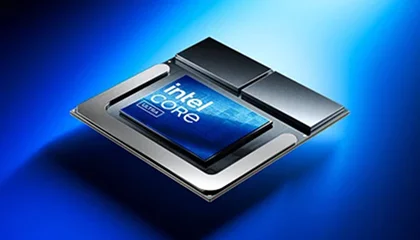
Intel® Core™ Ultra Series 3 Processors
With 180 TOPS and integrated SoC built on 18a, Intel® Core™ Ultra Series 3 Processors allocates compute resources to CPU, NPU, and built-in GPU to process multimodal media pipelines, accelerate AI inference, and deliver real-time controls, all at the point of care.

Heterogeneous Compute
Intel provides flexibility and performance across a portfolio of edge-ready devices optimized to AI workloads and enable real-time controls. Paired with software-defined scheduling, task management, and workload prioritization, Intel makes deterministic performance achievable from AI inferencing on OpenVINO™, down to OS-level integration with real-time Linux.
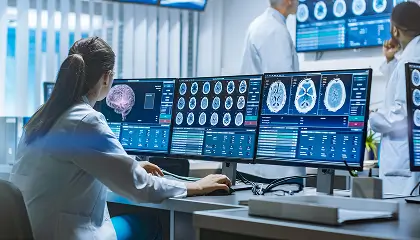
Gain efficiency, reduce complexity, optimize TCO
Eliminate the need for a discrete GPU to accelerate multi-camera, multi-stream AI pipelines and process LLMs for fast response. Dynamically scale power efficiency across distributed deployments for long-lasting performance in clinical settings and hospitals.
Deterministic Compute
Enable predictable timing for safety-critical clinical performance to power reliable, data-driven AI/ML applications at the edge, with real-time monitoring loops to provide advanced pattern recognition and reduce jitter through deterministic safety logic and timing constraints.
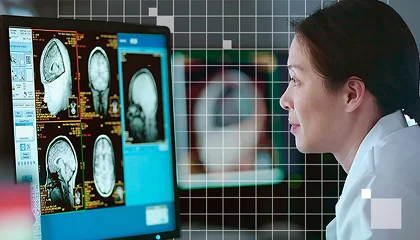
Ensure Safety and Reliability
Enforce hard rules and real-time control loops to ensure functional, stable, and predictable logic and timing to support safety functions and enforce regulatory compliance standards.

Time Coordinated Computing
Reduce latency and jitter with power-state and frequency controls to minimize delays and frequency swings to prioritize safety-critical control tasks and AI or general-purpose workloads running on same SoC.

Time Sensitive Networking
Extend determinism to hospital and remote clinical networks with time-aware scheduling to control and define bandwidth allocation to eliminate network queuing delays with on-time and repeatable AI workflows.
Open Edge Ecosystem
Intel’s empowers partners to seamlessly integrate AI solutions for smart cities, traffic, and security that extend x86 architectures for real-time decision making, improved efficiency, and reduced latency through an open, collaborative approach ensure performance, scalability, and lower overall cost.

Verified AI Edge Systems
Intel partners with OEMs and ODMs to benchmark and verify hardware solutions optimized to meet heterogeneous computing requirements for IoT and AI-driven metro and public safety deployments to ensure optimized hardware and software integration across a range of power levels, sizes and performance options.
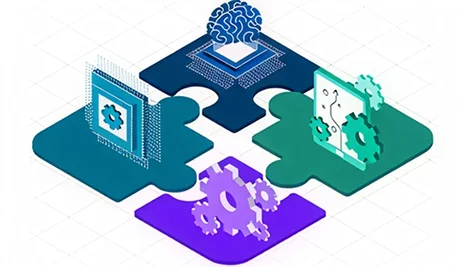
Open Edge Platform
A modular, open-source platform to simplify development, deployment and management of edge AI featuring industry-specific building blocks, microservices, frameworks, models, pipelines, and libraries that streamline integration and deployment with cloud-like simplicity and enterprise-grade security to enable infrastructure, applications and efficient AI deployments at scale.
Evaluation, Qualification, and Benchmarking
Build and deploy edge AI applications faster with tested, verified, qualified AI Systems, running real-world edge AI workloads, to ensure predictable performance, long-term reliability, and streamlined, scalable deployment.

Intel® ESQ for Intel® AI Edge Systems
This program enables solution builders to test and qualify AI systems running industry AI workloads to prove industrial reliability and viability for powering edge AI innovation.

Visual Pipeline and Platform Evaluation Tool (ViPPET)
Analyze throughput, CPU usage, and GPU usage with an open-source tool that enables custom performance benchmarking and KPIs to validate AI inference pipelines to measure latency and resource utilization.
Safety, Security, and Data Privacy
Intel provides strong full-stack safety, security, and real-time features that can be combined into certifiable medical-ready edge AI systems to reduce risk of cyber attacks that expose patient data.

Memory and Disk Encryption
Encrypt system memory at the controller to protect against physical and bus-level attacks, with immutable versions and Linux kernel security with dm-verity.
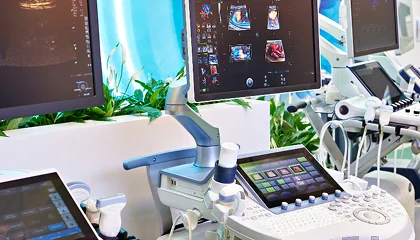
FuSA guidelines for high-performance safety workloads
Reduce risks with automatic protection and safety functions with blueprints to monitor sensors and actuators in real-time systems built on Intel silicon.

vPro Security
Intel vPro® provides built-in security features to protect patient data, detect threats, and recover from cybersecurity attacks with below-the-OS security controls.
Testimonials
“Our strategic partnership with Intel underscores our shared vision for delivering next-generation AI-enabled patient monitoring solutions. We're excited to collaborate with Intel and leverage their Health & Life Sciences AI Suite: which provides validated reference workloads, benchmarking tools, and open development workflows, resolving critical bottlenecks to accelerate AI innovations in healthcare.”
Bikram Day
Director, Informatics and Solutions Architecture
Medical Informatics Corporation

“Intel’s commitment to advancing patient care through the application of advanced AI capabilities aligns closely with our mission. We’re excited to work with the Health & Life Sciences AI Suite to support the development of next-generation intelligent patient monitoring solutions. These types of solutions are designed to help deliver timely, actionable insights at the point of care and support clinical workflows and operational efficiency.”
Miller Chang
President of Embedded Sector
Advantech

“At HIMSS26, we are leveraging the Health & Life Sciences AI Suite to strengthen our patient monitoring positioning. Through our partnership, we’re excited to support the next generation of AI enabled patient monitoring solutions built on Intel® Core™ Ultra and Kontron K4021-U mSTX.”
Jack London Director of Product Development Management

“We’re excited to support Intel’s Health & Life Sciences AI Suite for patient monitoring, and the role edge AI can play in improving patient care. With Intel processors running on Supermicro platforms, healthcare organizations can develop and deploy AI solutions that deliver real-time insights without relying on the cloud.”
Mory Lin VP, IoT/Embedded & Edge Computing

Use Cases
Understand performance requirements to evaluate and scale health and life science AI applications, with industry-ready Vision AI and Gen Al pipelines, microservices, libraries, and tools to guide hardware evaluation and selection.
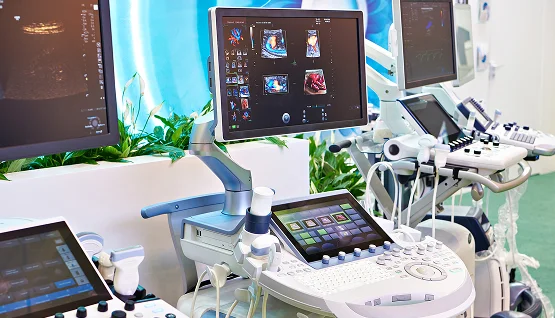
AI-Enabled 3D Ultrasound Pipeline
Modernize medical imaging by consolidating the entire 3D ultrasound workflow. Our unified pipeline runs advanced beamforming and AI-powered spatial rendering on a single Intel® Core™ Ultra processor, reducing hardware complexity and cost while delivering exceptional image clarity for improved diagnostic confidence.

AI-Enabled Surgical Endoscopy Pipeline
Enhance surgical precision with a powerful, consolidated AI pipeline for endoscopy. Running on Intel® hardware, this solution provides real-time instrument tracking, classification, and other critical analytics simultaneously, giving surgeons immediate, actionable insights without adding more hardware to the operating room.
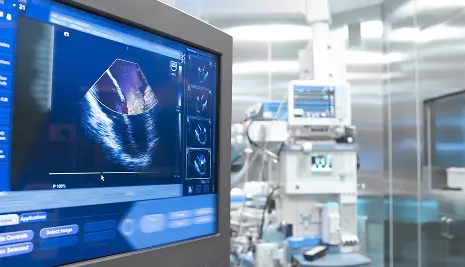
Patient Monitoring
The patient monitoring sample application uses computer vision to monitor patient vital signs and activity, and can be used to send alerts to the nursing staff. This helps to automate routine monitoring tasks, freeing up staff for more critical care.

NICU Warmer
Track infant vitals and safety with rPPG, pose-estimation, and analytics – send real-time alertswhen problems are detected.

Simulated multiparameter monitor (the OpenICE device)
Simulate and visualize today's multiparameter patient monitoring workloads with key signals like ECG, BP, HR, RR, and SpO2 numerics and waveforms. Demonstrates how multiple AI pipelines can run concurrently on a single Intel® platform with services to gather, aggregate, and visualize patient data from sensor fusion and time-series inputs into intelligent real-time health monitoring insights.

Remote Photoplethysmography (rPPG) Service
Perform remote photoplethysmography on patient video streams to estimate heart rate and respiratory rate with video ingestion, preprocessing, and AI inference targeting Intel GPU and NPU.

Real-time Patient Monitoring Insights 3D Pose Estimation Service
Gather critical patient vital signs like blood pressure and heart rate with time-series and sensor fusion into consumable formats to visualize, aggregate and correlate in dashboard-based UI.Detect human body joints in 2D and use monocular RBG cameras to create 3D estimations with key point detection in real time with AI inferencing and visualization.
AI ECG Arrhythmia Classification Service
Collect, process, and analyze heart electrical signals from wearables or external devices using lightweight deep learning models. This service simulates ECG classification to demonstrate real-time performance of the end-to-end workflow from acquisition, to preprocessing, and AI inference without cloud dependency.

Visual Pipeline and Platform Performance Evaluation Tool
Understand how AI Systems perform running multimodal pipelines and AI workloads to simulate performance benchmarks and right-size system configurations to deliver the power, performance, and efficiencies required to scale and operationalize at the edge.
Resources
Follow our latest thinking about how to enable and accelerate AI at the edge for health and life science industries.
Listen to this 5-part podcast series to discover trends in patient monitoring enabled with multimodal AI at the edge.

Laying Out the Landscape in Today’s Patient Monitoring
Listen to Intel’s Kaeli Tully and Dr. Sanjay Subramanian’s talk with Michelle Dawn Mooney about what patient monitoring looks like on the front lines and how it’s helping hospitals spot decline sooner.

The Hidden Roadblocks to Smarter Hospitals
Learn what’s holding back smarter more connected care with Intel’s Andrew Lamkin and Medical Informatics’s Bikram Day as they discuss technical and clinical roadblocks and what will improve outcomes.

Expanding Monitoring in Acute Care and Beyond
Unpack how analytics, wearables and wireless infrastructure are reshaping acute care and beyond with Intel’s Andrew Lamkin and Medical Informatics’ Sudha Yellapantula.

Why We Show Up for Care
Explore the people behind the infrastructure and innovation speaking on what they’ve learned through years of building smarter edge-based health systems with Intel’s Kaeli Tully and Andrew Lamkin, plus Medical Informatics’ Dr. Sanjay Subramanian, Critical Care Physician and CEO / Founder of Omnicure, plus Bikram Day, Director of Informatics.

What the Future Looks Like If We Get it Right
Explore bold predictions about personalized care and safeguards needed to responsibly build the future of connected care with edge AI in a panel discussion with Intel’s Kaeli Tully, and Medical Informatics’ Sudha Yellapantula and Bikram Day.
Advancing utility management with industry solutions that enhance operational efficiency.
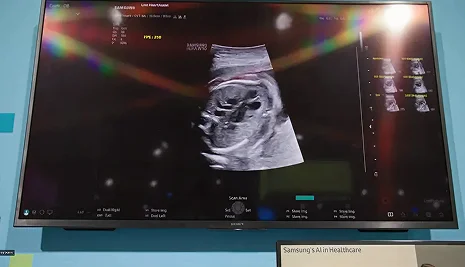
AI Inferencing in Ultrasound with Intel® Core™ Ultra Processors
Using Intel® Core™ Ultra Processors the Health and Life Science Team demonstrate ,why integrated AI acceleration is well suited for processing Vision AI inference on ultrasound images for fast throughput and model accuracy.
Learn how to enable real-time clinical monitoring with Edge AI with technical briefs from Intel and ecosystem partners.
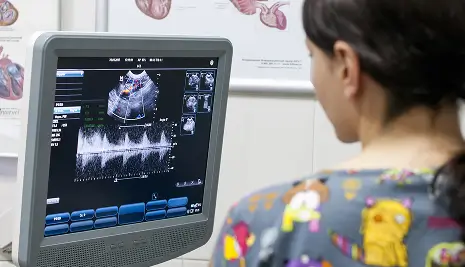
Real-time Clinical Monitoring with Edge AI
Deliver real-time anomaly detection by locally analyzing vital signs powered on Intel-CPU based edge devices and models with OpenVINO™, Intel® Core™ Processors, and Intel® Xeon™ Processors.
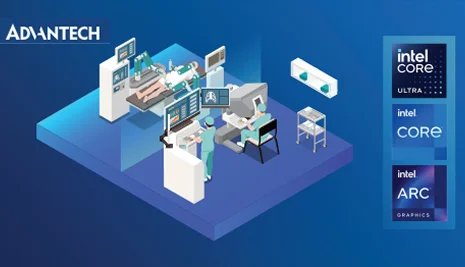
AI in the operating room starts with Intel
Provide AI inference in care settings such as digital operating rooms with integrated AI acceleration of Intel Core Ultra and Advantech.
Developer Tools
Discover tools that enable faster development and deployment of Vision AI and Gen AI models and multimodal RAG pipelines at the edge.

OpenVINO™ Toolkit
Transform models from popular frameworks to run on Intel-based silicon and optimize compression to quantize models for edge deployments, for Vision AI and Generative AI use cases.

Multi-Task Temporal Shift Convolutional Attention Network (MTTS-CAN) model
A deep learning model for contactless vital sign measurement from video commonly used to perform rPPG inference for heart rate and respiration signals from facial video in real time even on mobile / edge hardware. The MTTS-CAN model was developed by the University of Washington and Microsoft AI Research out of need for contactless vitals measurement.

Multimodal patient monitoring Data and Control Flows
Discover how the multimodal patient monitoring reference workload aggregates patient data to facilitate AI workload observability at the edge with telemetry data and power statistics from GPU, NPU, CPU, memory and others using the Metrics Collector Service, and UI service to visualize data in real time.

Connect with Us
Whether you have questions, need guidance, or want to share your feedback, we're just a click away.
Join our community, follow us on social media, or reach out directly to our team. .
Contact UsSubscribe To Our Newsletter
Subscribe to the newsletter for the latest updates on materials posted on the Intel Industry Solution Builders program.
By submitting this form, you are confirming you are an adult 18 years or older and you agree to share your personal information with Intel to use for this business request. You also agree to subscribe to stay connected to the latest Intel technologies and industry trends by email and telephone. You may unsubscribe at any time. Intel’s websites and communications are subject to our Privacy Notice and Terms of Use.
By submitting this form, you are confirming you are an adult (18 years or older) and you agree to share your personal information with Intel to use for this business request. You also agree to subscribe to stay connected to the latest Intel technologies and industry trends by email. You may unsubscribe at any time. Intel’s websites and communications are subject to our Privacy Notice and Terms of Use.